IoT product development
IoT and tracking device development in Dubai
Last updated Reviewed by the Quickgen engineering team
Quickgen Technologies develops IoT and tracking devices in Dubai, from its headquarters in Dubai Silicon Oasis. An IoT product only works when the hardware, firmware, connectivity and app all work together. Quickgen develops the whole stack: the PCB and sensors, the low-power firmware, the wireless link and the mobile or web app that shows the data.
We have built trackers for wildlife, livestock and drinkware, wearable sensor nodes, medication devices, connected retail and hospitality hardware, and the dashboards behind them. One team handles mechanical, electrical, firmware and software, so there are no handoffs between vendors.
IoT hardware development, end to end
Low-power sensor node design
Coin-cell and solar-powered nodes with IMU, temperature, humidity and other sensors, designed around sleep modes and duty-cycled radios.
GPS tracker hardware
GPS combined with BLE, LTE or satellite links, from add-on trackers for consumer products to wearable and animal tracking devices.
Connectivity
BLE, Wi-Fi, LTE, satellite, NFC, CAN and RS485, chosen for range, power and coverage, including fallback between links.
Firmware
Sensor drivers, power management, data buffering when offline and secure over-the-air updates.
Apps and dashboards
iOS, Android and web apps for setup, live data and alerts, plus cloud backends for storage and remote management.
Manufacturing support
DFM reviews, enclosure design and sourcing from pre-vetted manufacturers so the device can move from prototype to production.
IoT devices we have developed
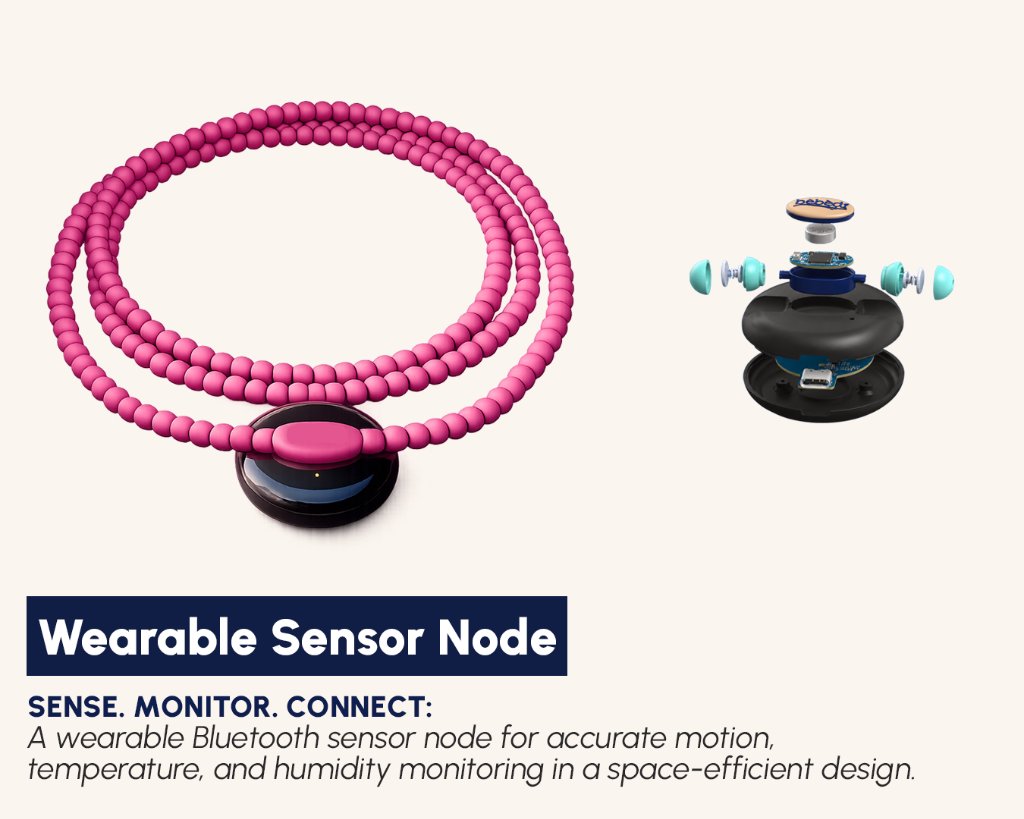
- A wearable BLE sensor node combining an IMU with temperature and humidity sensors in a sealed pendant, streaming over BLE 5.x.
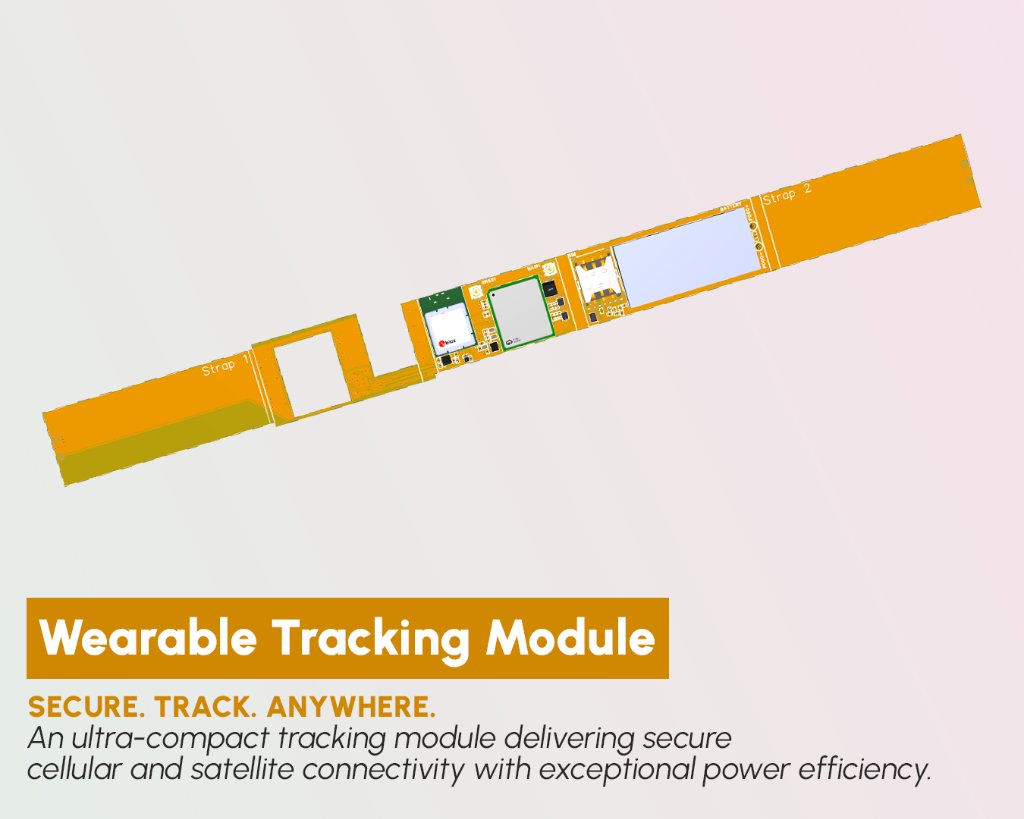
- An ultra-compact wearable tracking module on a flexible PCB with LTE, satellite and GPS for anywhere tracking.
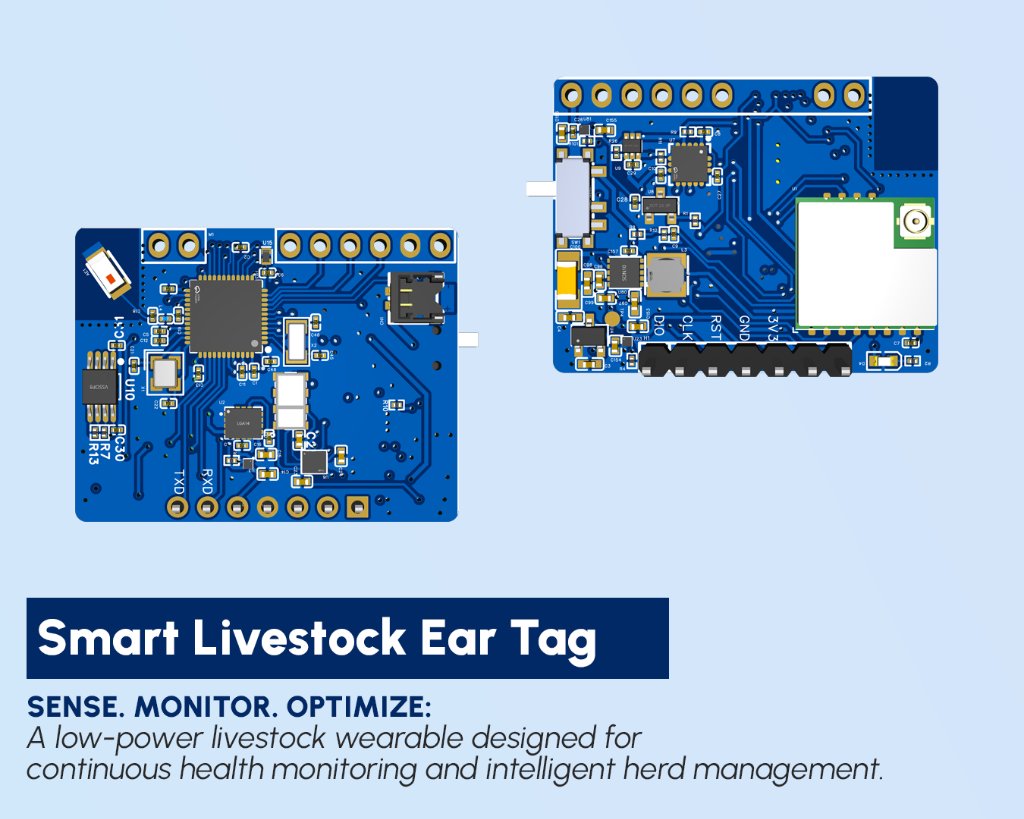
- A smart livestock ear tag with BLE, GPS and temperature sensing, built for months of low-power field use.
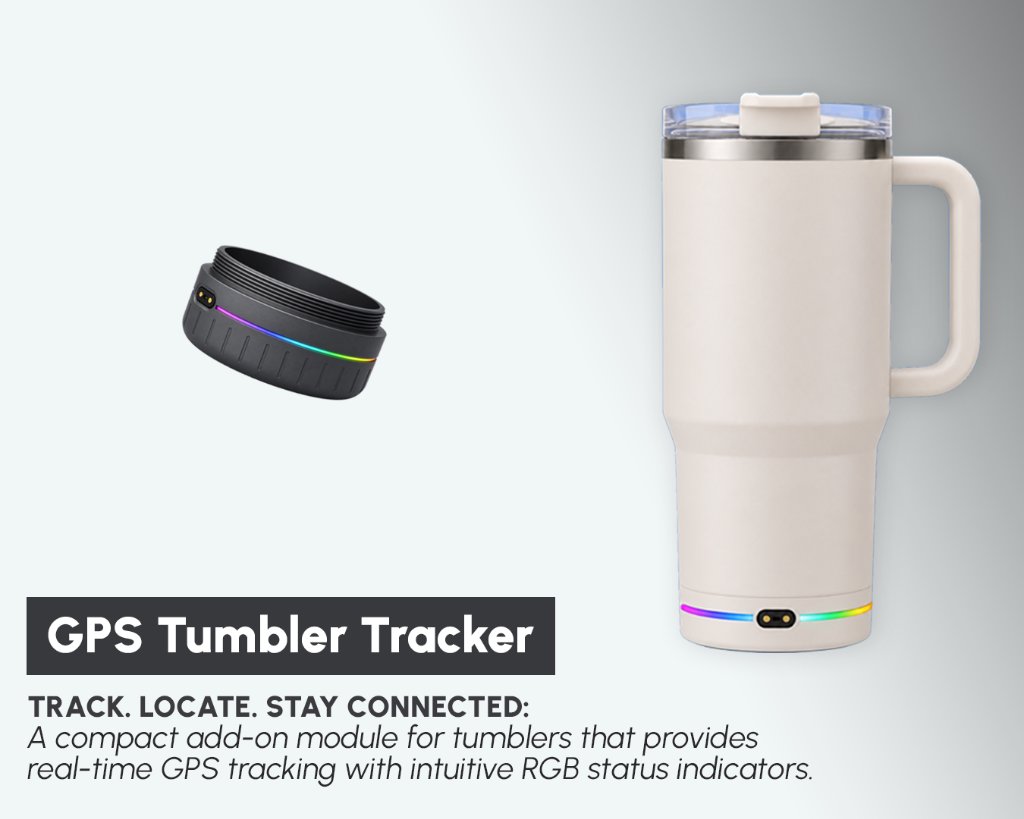
- A screw-on GPS tracker for tumblers with BLE app pairing, an RGB status ring and USB-C charging.
- An IoT pillbox with seven compartments and real-time adherence notifications for NAK Technologies (USA).
Designing for battery life and coverage
Most IoT products are judged on two things: how long the battery lasts and whether the data gets through. We decide these early, during feasibility, by choosing the radio, the sensors and the power architecture together. A tracker that reports every few minutes needs a very different design from a node that wakes once an hour.
Where coverage is uncertain we combine links, as in our wearable tracking module, which switches between LTE and satellite. Where size matters, we use flexible PCBs and dense layouts so the electronics fit a strap, an ear tag or the base of a bottle.
From prototype to production
Our process moves from feasibility and requirements, through schematic, PCB and mechanical design, to working prototypes that we test and debug ourselves. We finish with a production package: stable firmware, environmental testing and DFM files for the manufacturer. You own 100% of the IP on delivery.
Relevant projects
Health Tech and Wearables
Wearable Sensor Node
BLE Motion and Environment Sensor Pendant
Health Tech and Wearables
Wearable Tracking Module
Ultra-Compact Cellular and Satellite Tracker
IoT, Smart Devices and Electronics
Smart Livestock Ear Tag
Low-Power Animal Health Monitor
IoT, Smart Devices and Electronics
GPS Tumbler Tracker
Smart Tracking Module for Tumblers
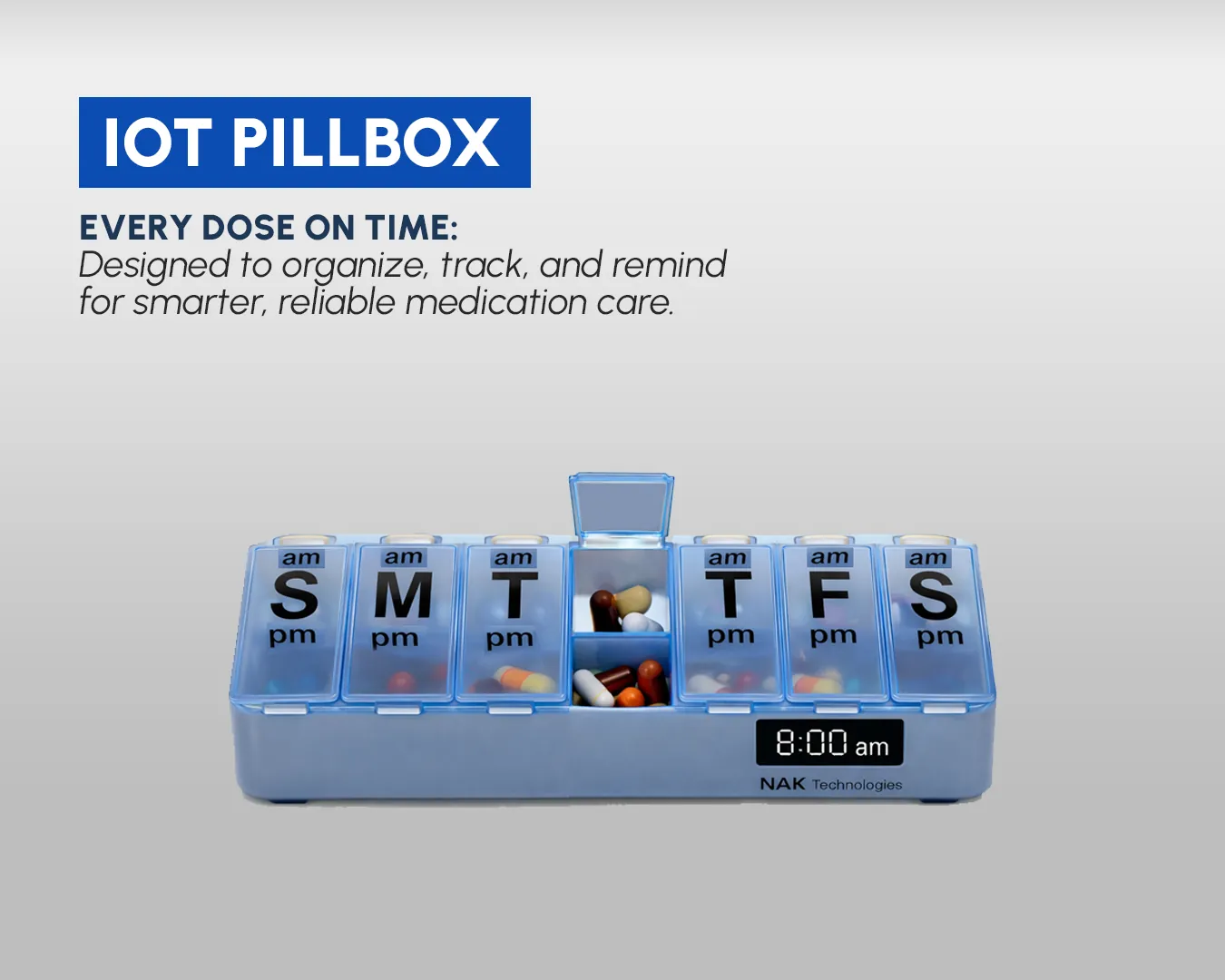
Health Tech and Wearables
IoT Pillbox
Smart Medication Management Device
Frequently asked questions
What does an IoT product development company do?
It designs every part of a connected device: the electronics and PCB, the firmware, the wireless connectivity, the enclosure and the app or cloud platform. Quickgen covers all of these with one in-house team.
Which wireless technologies do you work with?
BLE, Wi-Fi, LTE, satellite, NFC and GPS for devices, and CAN and RS485 for wired systems. We choose based on range, power budget and coverage.
Can you design low-power, battery-operated IoT devices?
Yes. Our sensor nodes, trackers and ear tags are designed around low-power radios, sleep modes and, where useful, solar charging.
Do you build the app and cloud side as well?
Yes. We build iOS, Android and web apps and the backend services that store data, send alerts and manage devices remotely.
How much does IoT product development cost?
Pricing is milestone-based and depends on the scope: hardware complexity, connectivity, certification needs and how much of the app and cloud you need. We quote after reviewing your requirements document.
Who owns the IP?
You do. We transfer 100% of the IP on delivery, with manufacturing-ready documentation.
Have a product to build?
Tell us what you are making. We will review your requirements and come back with a feasibility report, a timeline and a budget.
Book a discovery call →