Battery and power electronics
BMS design services and power electronics in Dubai
Last updated Reviewed by the Quickgen engineering team
Quickgen Technologies provides BMS design services and power electronics engineering in Dubai, from its headquarters in Dubai Silicon Oasis. Quickgen designs battery management systems, chargers, inverters and power distribution boards for electric vehicles, energy storage and portable products. We handle the schematic, the power PCB, the firmware and the communication with the rest of the system.
Power electronics punishes shortcuts. Current paths, thermal performance, isolation and protection all have to be right on the board, and the firmware has to monitor and react to faults. Our electrical and firmware engineers design these together.
What we design
Battery management system design
Cell monitoring, balancing, protection and pack communication, including multi-pack systems with cloud monitoring.
Cell balancing
Voltage measurement and balancing across multi-cell LiFePO4 packs, including cost-optimised designs using locally available parts.
LiFePO4 charger design
Efficient charging circuits for LiFePO4 batteries, combined where needed with load control such as lighting.
Inverters and solar
Hybrid inverter electronics balancing grid, battery and solar, with MPPT charging and remote monitoring.
EV electronics
Power management ECUs that distribute and protect power to motors, batteries, lighting and accessories.
Communication and monitoring
CAN, RS485 and Wi-Fi interfaces for integration with vehicles, chargers, displays and cloud dashboards.
Battery and power projects
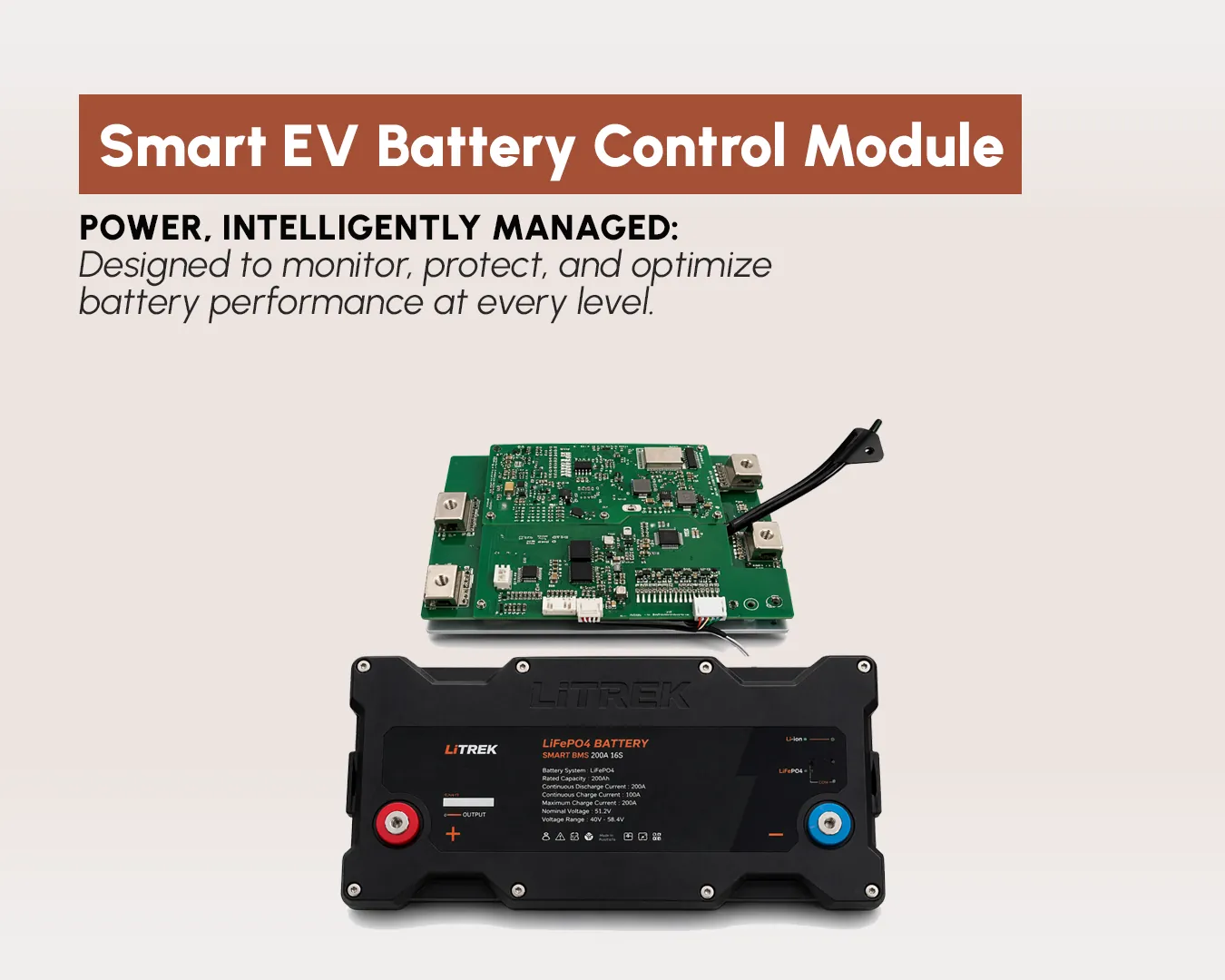
- OSmart BMS for LiTrek (Australia): a cloud-connected BMS controlling up to 16 battery packs over CAN and RS485, with a custom mezzanine board extending an off-the-shelf BMS.
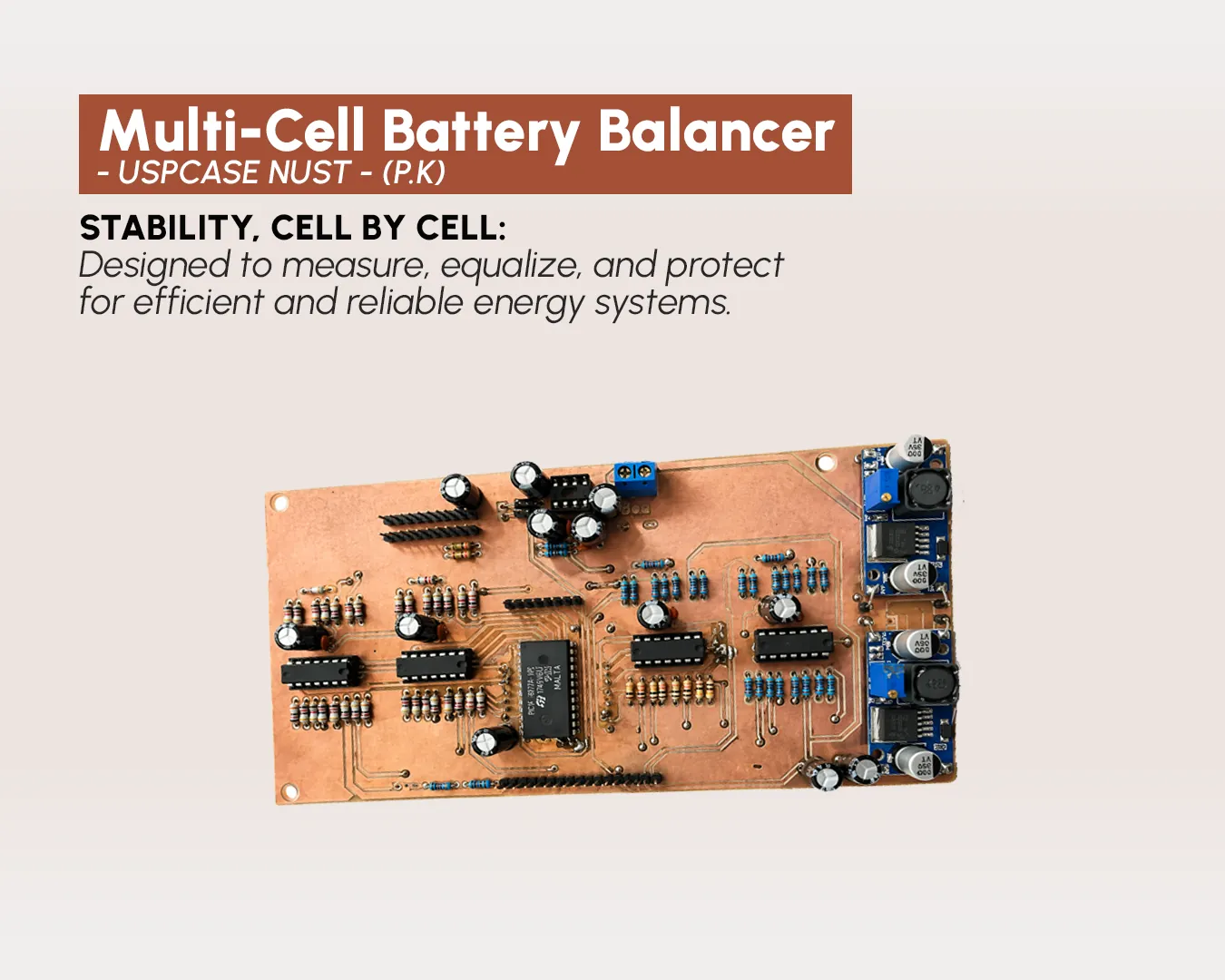
- Cell balancing circuit for USPCASE NUST (Pakistan): op-amp and ADC voltage measurement across up to 16 cells in LiFePO4 packs, using locally available components.
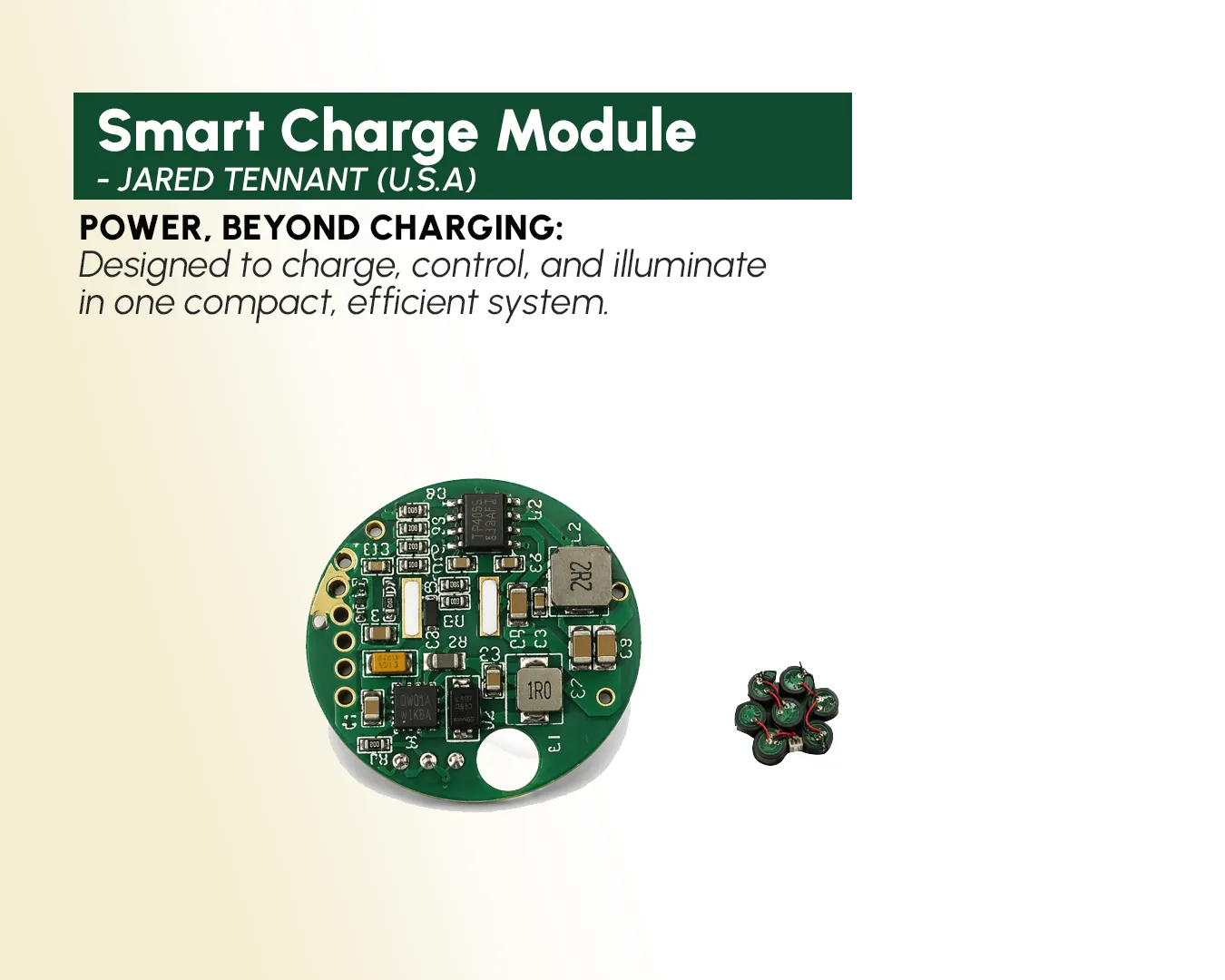
- LiFePO battery charger with flashlight control: fast, efficient charging and long-lasting illumination control on one compact PCB.
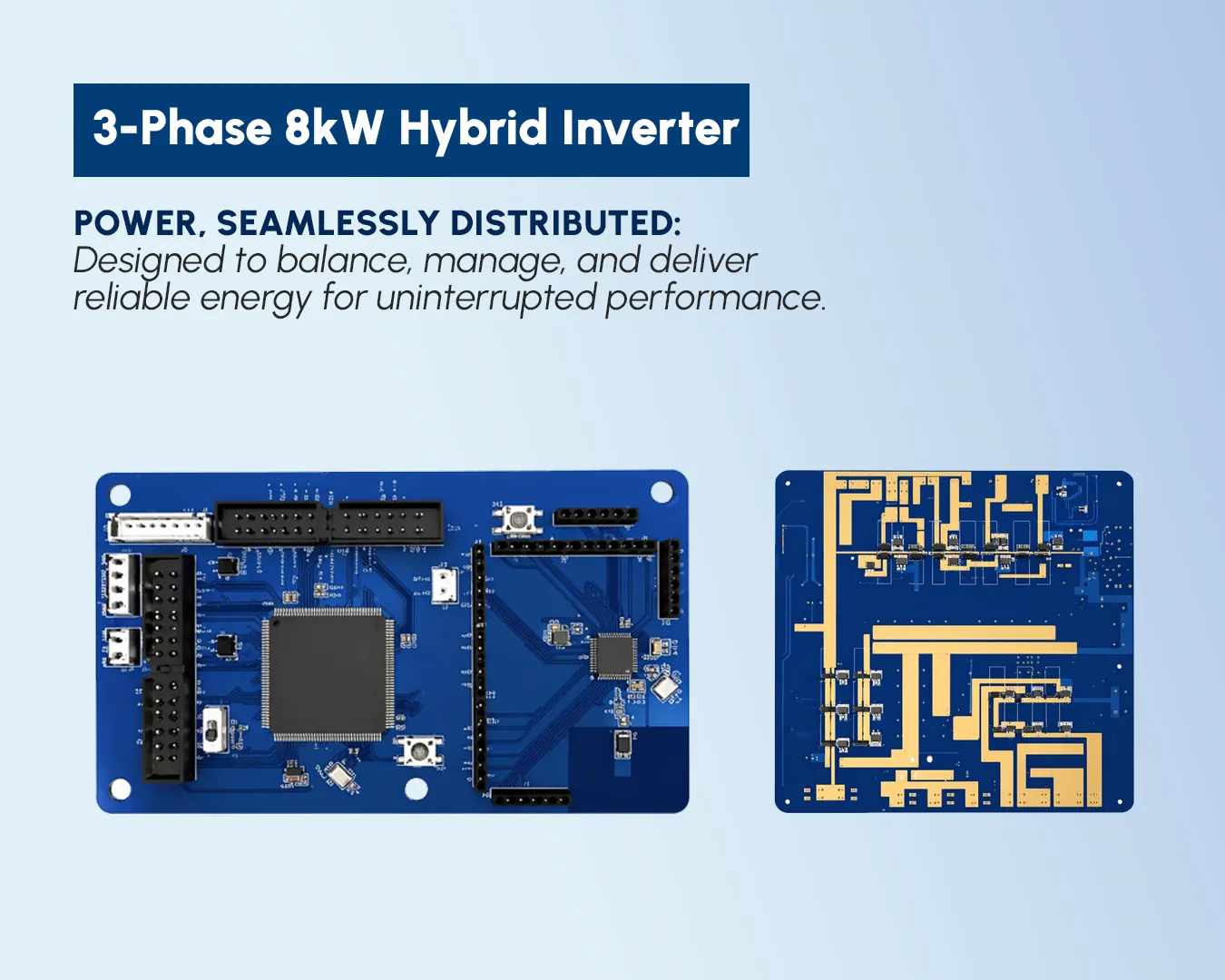
- 3-phase 8 kW hybrid inverter: pure sine output, grid/solar/battery switching, MPPT charging and monitoring over Wi-Fi, RS485 or CAN.
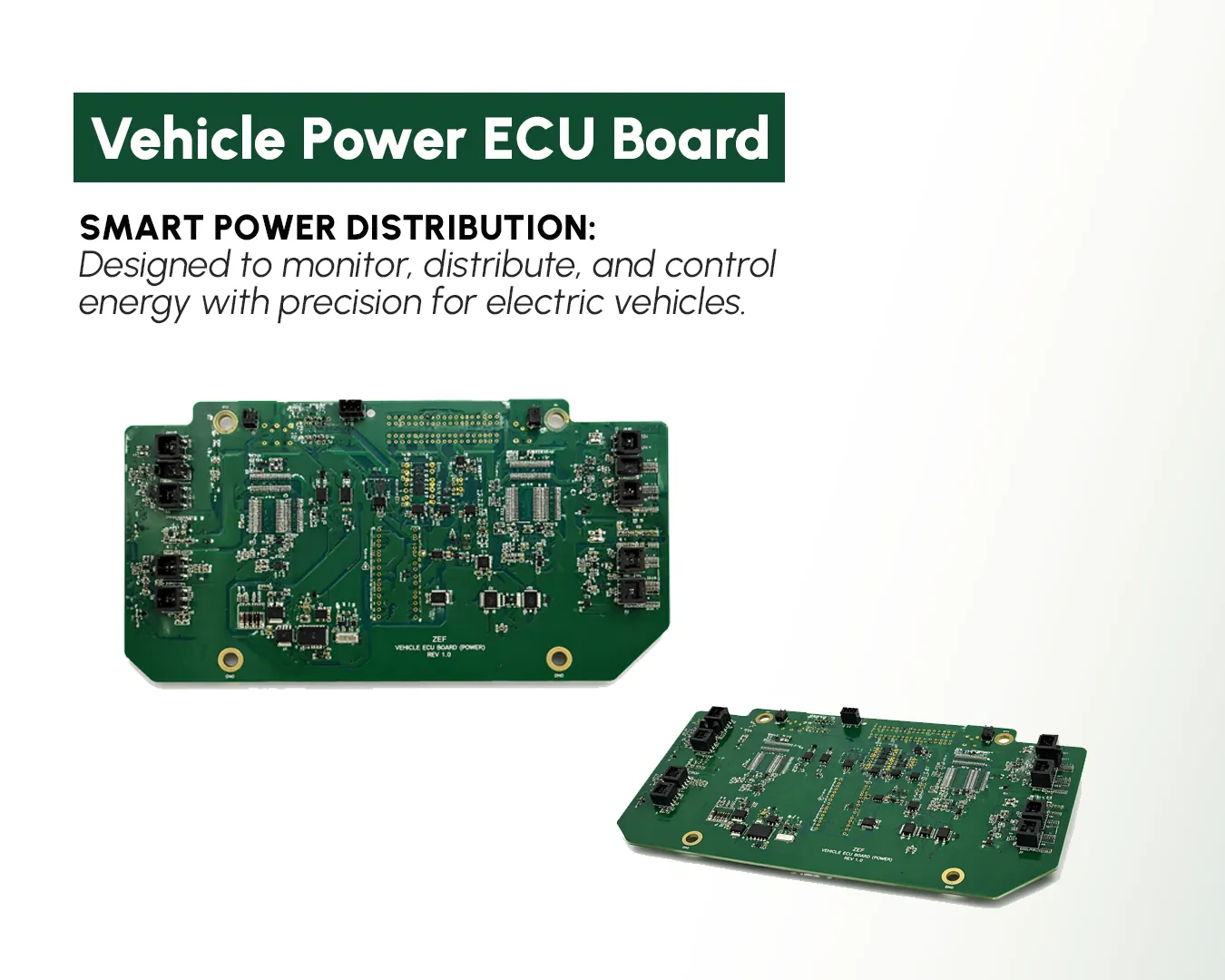
- ZEF vehicle ECU: multi-channel high-current power distribution with current sensing, fault protection, relay switching and isolated inputs.
How we approach power electronics
We start from the electrical requirements: voltages, currents, cell chemistry and count, operating environment and how the system has to communicate. Component selection and feasibility come first, because the choice of FETs, sensing method and controller sets the limits for everything else.
During layout we pay particular attention to high-current paths, thermal management, creepage and isolation, and protection against over-voltage, over-current and reverse polarity. Firmware then handles measurement, balancing, fault detection and reporting over CAN, RS485 or Wi-Fi.
Prototypes are built and tested on the bench and under realistic loads before we prepare the production package: stable firmware, environmental testing and DFM files. You own 100% of the IP.
Relevant projects
Battery Systems
OSmart BMS for EV
Cloud-Connected Battery Management System
Battery Systems
Cell Balancing Circuit for EV Battery
Cost-Effective EV Battery Cell Balancer
Battery Systems
LiFePO Battery Charger with Flashlight Control
Dual-Function Battery Charger & Flashlight
IoT, Smart Devices and Electronics
3-Phase 8KW Hybrid Inverter
High-Performance Solar Hybrid Inverter
Battery Systems
ZEF - Vehicle ECU Board
EV Power Management ECU
Frequently asked questions
What do your BMS design services include?
Cell monitoring and balancing circuits, protection, the power PCB, BMS firmware and communication over CAN, RS485 or Wi-Fi, through to prototypes and production files.
Do you work with LiFePO4 batteries?
Yes. Our cell balancing circuit and charger projects were designed for LiFePO4 packs.
Can you design electronics for electric vehicles?
Yes. We have designed an EV power management ECU and a BMS for EV battery packs, built to handle vibration, heat and power surges.
Can a BMS be monitored remotely?
Yes. Our OSmart BMS for LiTrek supports cloud-based remote management and real-time data across up to 16 battery packs.
How much does BMS design cost?
Pricing is milestone-based and depends on cell count, current levels, communication interfaces and whether you need cloud monitoring. We quote after reviewing your requirements.
Who owns the design and firmware?
You do. We transfer 100% of the IP on delivery.
Have a product to build?
Tell us what you are making. We will review your requirements and come back with a feasibility report, a timeline and a budget.
Book a discovery call →